Walter Mosley Visits the W.E.B. Du Bois Centre in Accra: A New York Secretary's Homecoming Story

Where Du Bois Spent His Final Years
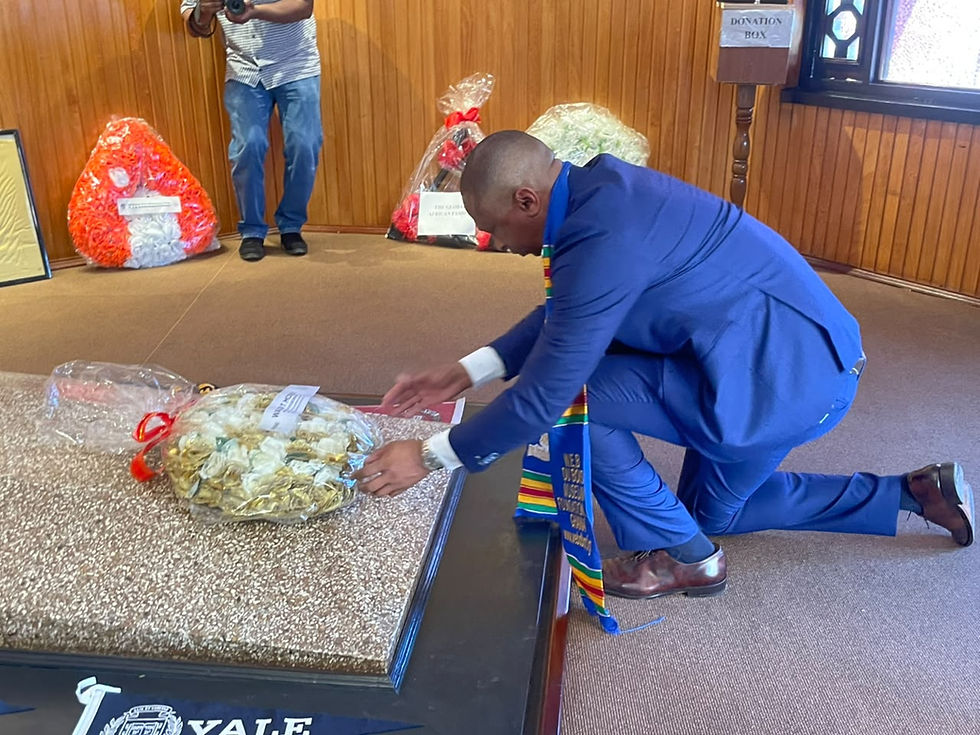
The W.E.B. Du Bois Memorial Centre for Pan-African Culture sits on First Circular Road in Cantonments, a short walk from the U.S. Embassy. Dr. W.E.B. Du Bois lived here during the last years of his life, and he is buried here alongside the ashes of his wife, Shirley Graham Du Bois.
Du Bois was 93 when he moved to Ghana in 1961 at the invitation of President Kwame Nkrumah, who asked him to lead the Encyclopedia Africana, a project to document the history and achievements of African people. He became a Ghanaian citizen and continued working until his death in Accra on August 27, 1963, one day before the March on Washington.
Walter Mosley's Private Tour of the Du Bois Centre in Accra
The visit connected closely to Secretary Mosley's own work. He chairs the New York State Commission on African American History, and he minored in African Studies and African American History at Penn State.
Maurice Cheetham, founder of Diaspora Bridge Consulting, coordinated the visit. His Accra-based firm connects diaspora leaders with government, traditional, business, and cultural institutions in Ghana. Meeting key stakeholders was one of the Secretary's main goals for the trip, and Cheetham built the Du Bois Centre visit into a program that also included meetings with civic and community leaders in Accra.

Because the campus is under renovation, the bungalow where Du Bois lived was closed to visitors. Instead, Secretary Mosley was escorted on a private tour of the Centre's photograph exhibit and its document preservation lab.
The photograph exhibit follows Du Bois's life, from his years as a scholar and editor in the United States to his final years in Accra. In the preservation lab, papers, books, and records connected to Du Bois are cared for so they remain available to future students and researchers.
President Jerry John Rawlings opened the memorial on June 22, 1985, after Du Bois's remains were moved there from Christiansborg Castle in Osu. Four decades later, the campus is being renovated, and much of the work of protecting Du Bois's legacy now takes place in its archives and lab.
Walter Mosley Meets With the W.E.B. Du Bois Museum Foundation
After the tour, Secretary Mosley met with Japhet Aryiku, Executive Director of the W.E.B. Du Bois Museum Foundation, the nonprofit leading the redevelopment of the Centre.
Formed in 2019, the Foundation works with the Government of Ghana to turn the memorial into a full museum complex with a library, museum, conference center, art theater, and guest accommodation. Board members have already contributed to restoring Du Bois's bungalow, and the next phase depends on a wider fundraising campaign.

Diaspora Bridge Consulting arranged the meeting to focus on practical ways New York could support the Foundation's work. The discussion centered on how Secretary Mosley could help connect the Foundation with New York philanthropic foundations that fund history, education, and preservation; business leaders and diaspora investors with ties to Ghana; and government and civic networks across New York State with an interest in partnerships in Africa.
The New York connection has deep roots. Du Bois built much of his career in New York City, where he helped found the NAACP in 1909 and edited its magazine, The Crisis, for more than 20 years. The Foundation's partnership agreement with the Government of Ghana was also signed in New York City, in 2021.
Walter Mosley's Private Tour of the Du Bois Centre in Accra
New York State Secretary Walter T. Mosley was given a private tour of the W.E.B. Du Bois Memorial Centre for Pan-African Culture during his September visit to Ghana. For a man who chairs the New York State Commission on African American History, and who minored in African Studies and African American History at Penn State, this was not a stop to squeeze between meetings.
The visit was coordinated by Maurice Cheetham, founder of Diaspora Bridge Consulting, an Accra-based firm that connects diaspora leaders with Ghanaian government, traditional, business, and cultural institutions. One of Secretary Mosley's goals for his Ghana trip was to meet with key stakeholders across the country, and Cheetham built the Du Bois Centre stop into that program alongside meetings with civic and community leaders in Accra.
The campus is currently under renovation, so the bungalow itself was closed. Instead, Secretary Mosley was escorted on a private tour of two parts of the Centre that most visitors never see up close: the photograph exhibit and the document preservation lab.

The photographs trace a life spent arguing for the dignity of Black people everywhere, from Du Bois's years as a scholar and editor in the United States to his final chapter in Accra. The preservation lab tells a quieter story. It is where the papers, books, and records connected to Du Bois are cared for so they last long enough for the next generation of students and scholars to read them.
The Centre itself is a product of remembrance. In 1985, President Jerry John Rawlings had Du Bois's remains moved from Christiansborg Castle in Osu to this site and formally opened the memorial on June 22 of that year. Four decades on, the campus is being renovated, and much of the work of protecting Du Bois's legacy is happening behind the scenes, in labs and archives, as much as in the public rooms.
Walter Mosley Meets the W.E.B. Du Bois Museum Foundation on New York Support
After the tour, Secretary Mosley sat down with the leadership of the W.E.B. Du Bois Museum Foundation, the nonprofit that has taken on the job of carrying this house into its next chapter and making sure the next generation has somewhere to meet Du Bois in person.
The Foundation, formed in 2019, works with the Government of Ghana to turn the memorial into a full museum complex: a library, museum, conference centre, art theatre, and guest accommodation. Board members have already put their own money into restoring the bungalow. The next phase depends on a wider fundraising campaign.

Diaspora Bridge Consulting arranged the meeting so the conversation could move past a courtesy visit and into practical ways New York could support the Foundation's work.
That is where the conversation went. The meeting focused on how Secretary Mosley could help the Foundation reach the people in New York who can move a project like this: the philanthropic foundations that fund history, education, and preservation; the business leaders and diaspora investors with ties to Ghana; and the government and civic networks across New York State that are looking for meaningful partnerships on the continent.
There is a certain symmetry to it. Du Bois built much of his career in New York, where he helped found the NAACP and edited The Crisis for more than twenty years. The Foundation's partnership agreement with Ghana was signed in New York City in 2021. Now a New York official is helping bring that city's resources back to Du Bois's final home.
Visiting the W.E.B. Du Bois Centre in Accra
Du Bois spent his life insisting that the history of African people deserved to be written down, preserved, and taken seriously. The bungalow in Cantonments is where that argument ended for him, and where it keeps going for everyone who visits.
Whether the next chapter includes a world-class museum depends on people deciding to show up: travelers who make the trip, donors who fund it, and officials like Secretary Mosley who are willing to open their networks for it.
Visit the W.E.B. Du Bois Centre: No. 22 First Circular Road, Cantonments, Accra. The campus is currently under renovation, so check which areas are open before you go. Typical hours are Monday to Friday, 9 AM to 4 PM, and Saturday, 10 AM to 3 PM.
Comments